
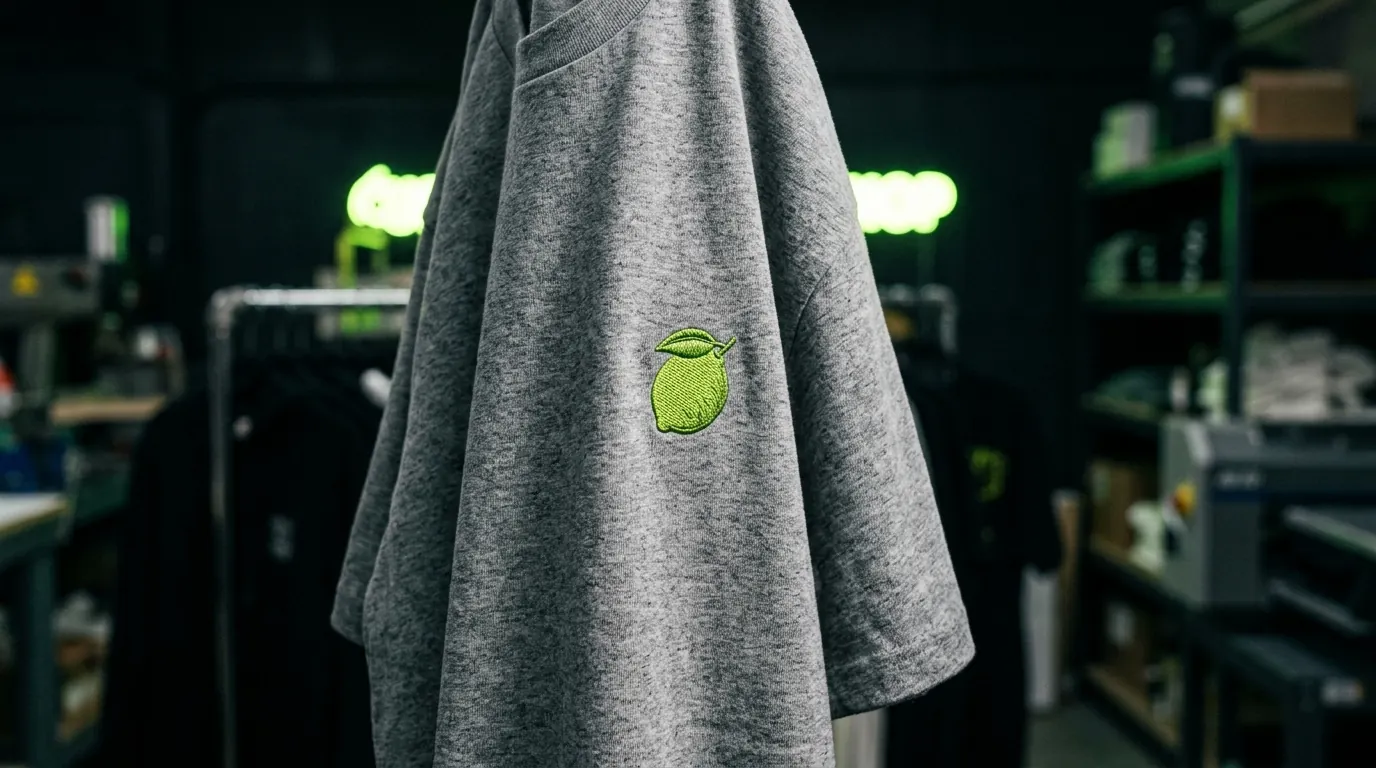
Walk into any well-run retail store, corporate office, or hospitality venue and you’ll almost always notice the same thing, the staff uniforms have stitched logos, not printed ones. That’s not coincidence. Embroidered t shirts have quietly become the standard for brands that care about how they present themselves, and for good reason. This guide breaks down everything worth knowing about the craft, the process, the materials, and how to make smart decisions when ordering custom work.
What Embroidery Actually Is (And Why It’s Different)
Embroidery is the process of stitching thread directly into fabric to form a design, a logo, a word, a pattern, or any combination of those. On t-shirts, this is done with industrial machines that follow digitized stitch files. The output is a raised, textured design that has actual physical depth, unlike anything that comes out of a printer.
No ink. No coating. No transfer film. The design is part of the fabric.
That’s a fundamental difference from screen printing or heat transfer methods, and it’s what makes embroidery behave differently over time. Thread doesn’t crack. Thread doesn’t peel. And when chosen correctly, it doesn’t fade either.
Embroidery vs. Screen Printing: The Honest Comparison
Screen printing isn’t bad, it just has a different use case. For large graphic fills across a full shirt front, printing is usually the more practical choice. But for logos, brand marks, chest placements, and sleeve badges, embroidery is in a different category.
Here’s where the distinction actually matters:
- Longevity: Embroidered designs hold up through heavy commercial washing. Printed designs, especially vinyl or heat-press transfers, start showing wear after a few dozen cycles.
- Professional appearance: A stitched logo reads as intentional and high-quality. A cracking, faded print sends the opposite message.
- Tactile quality: Embroidery has weight and texture. You can feel the craftsmanship. Printing is flat.
- Color retention: Thread holds its color under UV exposure and friction in a way ink-based methods rarely match long-term.
The one area where embroidery has limits is fine detail, very thin lines, photorealistic imagery, or tiny text under about 4mm in height don’t translate cleanly into stitch form. For those situations, printing makes more sense. For everything else, embroidery is the stronger option.
Thread Quality: The Detail Most People Overlook
Most people focus on the logo and forget about the thread. That’s backwards. Thread is where quality is actually decided.
Embroidery floss, in its traditional form, is stranded cotton thread used in hand stitching. In machine embroidery for apparel, the industry equivalent is typically rayon or polyester thread. Rayon has a richer sheen, which makes it popular for decorative and fashion applications. Polyester is tougher, more resistant to bleaching, UV exposure, and industrial washing, which makes it the right call for workwear and uniforms.
The weight, twist, and fiber composition of the thread affects both how the design looks fresh off the machine and how it holds up six months later. Lower-quality threads pill at dense stitch areas, lose their sheen, and start unraveling at the edges. Premium thread doesn’t do that.
Any reputable embroidery shop should be able to tell you exactly what thread brand and type they use. If they can’t, or won’t, that’s worth paying attention to.
The Stitch Types That Shape the Final Result
The way a design is stitched, not just the design itself, determines the finished quality:
- Satin stitch: Long, parallel stitches that produce clean, smooth lines. Used heavily for lettering and borders.
- Fill stitch (tatami): Covers larger areas with a consistent texture. The density and direction of the fill changes how the area reads visually.
- Running stitch: Thin outline stitch used for fine details and as a base for other techniques.
- 3D puff embroidery: A foam underlay lifts the design off the fabric, creating a bold three-dimensional effect. Common in caps and certain streetwear applications.
A skilled embroidery shop selects the right stitch type for each element rather than defaulting to one approach for everything.
What to Look for When Choosing an Embroidery Shop
The shop you choose matters more than most people realize. Two shops can take the same design file and produce noticeably different results, purely based on their equipment, thread inventory, and digitizing skill.
Digitizing is the starting point. Digitizing converts your artwork into a stitch file. Poor digitizing leads to thread breaks, uneven fill, and distorted outlines, issues that become permanent once the design is stitched. Good digitizing accounts for fabric movement, stitch density, and how the design will behave on knit material specifically.
Request a physical sample. Before committing to a production run, any serious embroidery shop will produce a sample. If they refuse or push back on this step, that tells you something important.
Check their thread range. Shops with a narrow thread palette often substitute colors rather than matching them. For branded work where color accuracy matters, Pantone-matched thread systems are the standard worth asking about.
Understand their minimum order requirements. Some shops won’t touch orders under 24 or 48 pieces. Others specialize in custom embroidery with no minimums, which matters for small businesses, events, or one-off projects.
Ask about their experience with knitwear. T-shirt fabric behaves differently under a needle than woven fabric does. Jersey knit stretches, which means the garment needs to be hooped and stabilized correctly to avoid puckering. Shops that primarily work with polos or structured hats may not have that adjustment dialed in for softer t-shirts.
Why Businesses Benefit from Embroidered Apparel
For any business using branded clothing, hospitality, retail, corporate, trades, healthcare, embroidery does something that printing doesn’t do as well: it signals investment. An embroidered logo on a team shirt says that the brand paid attention to the details. That’s a form of communication that happens before anyone reads the logo.
Custom embroidery on staff uniforms also has a measurable practical benefit. Embroidered garments last longer, which means replacement cycles are longer, which means the cost-per-wear calculation usually favors embroidery over time even when the upfront unit cost is higher.
For businesses building branded merchandise programs, embroidered items also tend to hold their retail value better. Customers who spend $35–$50 on a branded t-shirt expect it to look good after 50 washes. Embroidery delivers on that expectation. Screen-printed alternatives often don’t.
Taking Care of Embroidered Garments
Embroidery is inherently low-maintenance, but a few habits extend the life of the stitching significantly:
- Turn the garment inside out before washing to protect the stitch surface.
- Use a gentle or delicate cycle for regular home washing.
- Avoid ironing directly over the embroidered area, press from the inside of the garment or use a cloth barrier.
- For commercial laundering situations, polyester thread is the better choice since it handles bleach and high-temperature cycles without degrading.
There’s nothing complicated about caring for an embroidered piece. The stitching is designed to outlast normal wear. The goal is just not to work against it unnecessarily.
Cost Versus What You’re Actually Getting
Embroidery costs more per unit than printing at low quantities, there’s no point pretending otherwise. Setup includes digitizing fees, and stitch count drives production time, so detailed or large designs cost more to produce than simple ones.
The relevant question isn’t “why is embroidery more expensive?” It’s “what am I paying for, and does it hold its value?” An embroidered garment that looks good after two years of regular washing is worth more than a cheaper printed alternative that looks tired after six months. For branded apparel especially, that durability is part of the return on the investment.
Strategically, many brands keep their embroidered logo compact, a well-constructed mark at 2–3 inches is typically more impactful and costs less to produce than a larger, stitch-heavy version of the same design.
FAQs
1. What fabric works best for embroidered t-shirts?
Medium-weight cotton and cotton-polyester blends perform best. They provide enough structure to hold the stitching without distorting. Very lightweight or loosely knit fabrics can shift under the hoop and may pucker if not properly stabilized.
2. Can embroidery be done on dark-colored shirts?
Absolutely. Thread color is independent of shirt color, unlike some printing techniques that struggle on dark backgrounds. The thread sits on top of the fabric, so color contrast is just a matter of choosing the right thread shades for the design.
3. How many thread colors can a design use?
Commercial machines typically support up to 15 color changes per run. For cost and production efficiency, most embroidered logos work best with 3–6 colors. More color changes add time and complexity without always adding visual impact.
4. Can small logos or fine text be embroidered accurately?
Text below roughly 4–5mm in height is difficult to read in stitch form, the letters just don’t have enough space for clean definition. Fine-detail logos may need slight simplification to translate well. A good digitizer will flag these issues before production.
5. How long does embroidery hold up compared to printing?
Under standard care, embroidery holds up for the life of the garment. Screen printing and heat transfers typically start showing wear, cracking, fading, peeling, within 30–50 wash cycles. Embroidery doesn’t have that degradation curve.
6. What’s a typical turnaround time for a custom order?
Most commercial shops work within a 7–14 business day window for standard orders. Rush production is usually available at a higher rate. Turnaround varies with order size and how backed-up the shop is during peak seasons.
7. Is it possible to order just one piece?
Yes, depending on the shop. Many custom embroidery specialists now accommodate single-piece orders, though the per-unit cost will be higher because digitizing and setup fees don’t change regardless of quantity.
8. Does embroidery make a t-shirt stiffer or heavier?
For standard logo placements, the difference in weight and hand feel is minimal. Large, high-density embroidery over a big area can add some stiffness to that section of the fabric, which is worth considering on very lightweight shirts, though it rarely affects wearability in practice.
Conclusion
The difference between a good-looking branded t-shirt and a forgettable one often comes down to whether the logo was stitched or printed. Embroidery holds its shape, holds its color, and holds its professional appearance long after other methods have started to deteriorate. When you’re choosing between a quick, cheap turnaround and something built to last, the long-term case for embroidered t shirts is straightforward. Work with an embroidery shop that takes digitizing seriously, pays attention to thread quality, and treats your artwork as something worth getting right, and the finished product will reflect that investment every time it’s worn.
Ready To Print Something Great?
Screen printing, embroidery, DTF and DTG, all in house in West Palm Beach since 2013. Tell us the piece count and your in-hands date and we come back with a real quote.