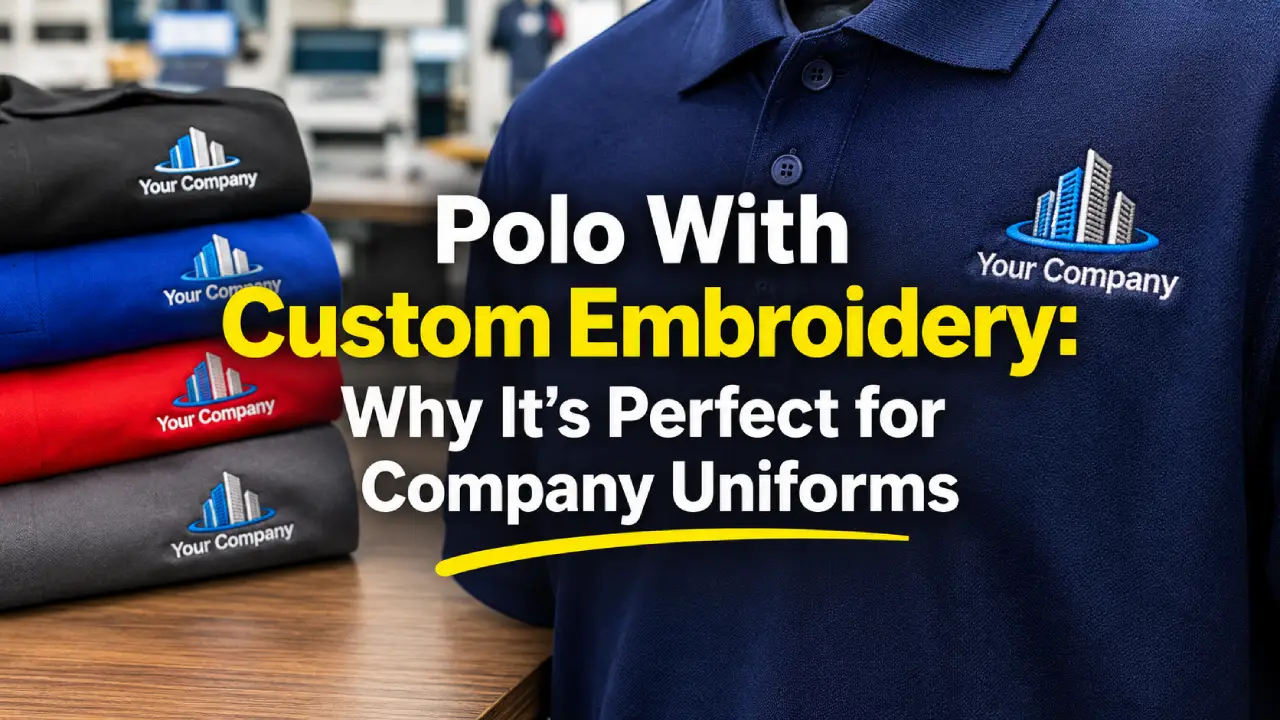

Walk into any coffee shop, gym, or medical office and look at the staff. Chances are, their shirts or jackets carry a small, stitched logo near the chest. That’s not an accident. More business owners are turning to custom embroidery because it makes their brand look established, trustworthy, and put-together, without shouting for attention.
Whether you’re outfitting a five-person team or a hundred-person company, embroidered apparel has become one of the simplest ways to build a professional identity. This guide breaks down what custom embroidery actually is, why it works so well for businesses, and how to avoid the mistakes that trip up first-time buyers.
Custom Embroidery: Why It Matters for Modern Businesses
Custom embroidery is the process of stitching a design, logo, or text directly into fabric using colored thread. Unlike printing, which lays ink or vinyl on top of a garment, embroidery becomes part of the fabric itself. That’s the core difference: printing sits on the surface, embroidery is woven in.
This distinction matters more than people realize. Printed designs can crack, peel, or fade after a handful of washes. Stitched designs hold their shape and color for years, which is exactly why so many companies choose it for anything meant to last.
Industries that lean heavily on embroidery include:
- Healthcare and dental offices
- Restaurants and hospitality groups
- Construction and trade businesses
- Real estate and financial services
- Gyms, salons, and wellness studios
- Corporate offices that issue branded gear
If a business wants its team to look consistent day after day, embroidery is usually the go-to choice.
Benefits of Embroidery for Business Apparel
There’s a reason embroidered polos and jackets show up at nearly every trade show and job site. The benefits go beyond aesthetics.
Professional appearance. Stitched logos have texture and depth that printed graphics simply can’t match. It reads as higher quality, even on a basic garment.
Brand recognition. A consistent logo on every uniform helps customers recognize your team instantly, whether they’re at a job site or behind a counter.
Long-lasting decoration. Embroidery can survive hundreds of wash cycles without cracking or fading, which makes it ideal for daily-wear uniforms.
Premium look and feel. Even inexpensive garments look more polished once a clean embroidered logo is added.
Employee unity. Matching apparel creates a sense of team identity and makes staff easy to spot for customers who need help.
Customer trust. Uniforms signal legitimacy. People are naturally more comfortable working with a business that looks organized and professional.
Popular Products That Can Be Embroidered
Almost any fabric item can carry an embroidered design, but some products are far more common in business settings than others.
- Polo shirts: the standard for customer-facing staff
- Jackets and outerwear: great for outdoor crews and cooler climates
- Hats and caps: popular for casual branding and giveaways
- Hoodies: common in retail, gyms, and creative industries
- Tote bags: useful for promotional events and client gifts
- Workwear: durable options for trades and industrial teams
- Uniforms: scrubs, aprons, and service staff attire
One product that often gets overlooked is custom embroidery lids. Embroidered hat lids, brims, and panels give businesses a subtle branding option that pairs well with staff uniforms or promotional merchandise, especially for outdoor teams like landscapers, delivery drivers, or event staff.
Understanding Embroidery Materials
Good embroidery isn’t just about the design. It depends heavily on the materials behind it.
Thread quality plays a huge role in how a design looks and holds up over time. Higher-grade polyester threads resist fading and fraying far better than budget options, which matters if your team is washing uniforms weekly.
Fabric selection affects how cleanly stitches sit. Tightly woven fabrics like twill or pique hold detail well, while stretchy or thin materials can pucker if not handled correctly.
Stabilizers are a backing material placed under the fabric during stitching. They prevent shifting and puckering, especially on thinner garments like t-shirts or lightweight jackets.
Many shops also use embroidery floss for smaller decorative accents or hand-finished details on premium pieces. While machine embroidery handles most business orders, floss work is sometimes used for specialty touches that need a handmade feel.
Choosing the Right Embroidery Partner
Not all embroidery providers deliver the same quality. Before committing to a large order, it helps to evaluate a few key factors.
- Experience: ask how long they’ve worked with business or corporate orders
- Equipment: modern multi-head machines produce cleaner, more consistent stitching
- Digitizing quality: this is the process of converting your logo into a stitch file, and it’s the single biggest factor in how your final design looks
- Sample approval: a good embroidery shop will send a proof or physical sample before running your full order
- Turnaround time: confirm realistic timelines, especially around holidays or busy seasons
- Customer service: responsive communication saves headaches if something needs adjusting
- Pricing: compare setup fees, per-item costs, and any minimums
Taking the time to vet a provider upfront saves money and frustration down the line.
Common Mistakes Businesses Should Avoid
First-time buyers often run into a few predictable issues.
- Poor logo sizing: tiny text or intricate details can blur or disappear once stitched
- Wrong thread colors: screen colors don’t always match physical thread, so always request a color chart
- Cheap garments: low-quality fabric can pucker or wear out faster than the embroidery itself
- Ignoring stitch limitations: gradients and fine shading don’t translate well to thread
- Ordering without samples: always approve a physical or digital proof before a bulk run
Avoiding these pitfalls upfront makes the entire process smoother and prevents costly reorders.
How Embroidery Supports Long-Term Branding
Branding isn’t built in a single order. It’s built through repetition. Every time a customer sees your logo on a uniform, jacket, or hat, it reinforces recognition and trust.
Because embroidery holds up so well over time, it becomes a dependable, low-maintenance branding tool. Businesses don’t need to reorder gear every few months due to fading or cracking, which keeps both costs and brand presentation consistent year after year.
Looking for a Reliable Embroidery Shop?
If you’re ready to outfit your team, working with an experienced embroidery shop makes all the difference. From embroidered t shirts for everyday staff wear to more detailed uniform programs, a good shop will guide you through logo digitizing, thread matching, and fabric selection so the final product looks sharp and lasts.
Businesses searching for embroidery West Palm Beach options, or simply typing “embroidery shop near me,” are often looking for the same thing: a local partner who understands quality and turnaround time. Choosing a shop that offers samples, clear pricing, and responsive service will save time and headaches on every order that follows.
Frequently Asked Questions
1. How long does embroidery last?
With proper care, embroidered designs typically last for years and can outlive the garment itself, especially with quality thread and fabric.
2. Is embroidery better than screen printing?
It depends on the use case. Embroidery is more durable and looks more premium, while screen printing is often better for large, colorful graphics or short-term promotional runs.
3. What fabrics work best for embroidery?
Tightly woven fabrics like twill, pique, and canvas hold stitching best. Very thin or stretchy fabrics require extra stabilizer to avoid puckering.
4. What file format is needed for a logo?
Vector files like AI or EPS work best since they allow clean digitizing. PNG or JPG files can work but may need cleanup first.
5. Is there a minimum order quantity?
Minimums vary by shop. Some accept single-item orders, while others require a set quantity to keep setup costs reasonable.
6. Can small logos be embroidered accurately?
Yes, but very small text or fine details may need simplification, since thread can’t replicate the same precision as digital printing.
7. What’s a typical turnaround time?
Standard orders usually take one to two weeks, though rush options are often available for an added fee.
8. How should embroidered apparel be cared for?
Turning garments inside out before washing and avoiding high heat when drying helps preserve stitch quality and color over time.
Final Thoughts
Embroidered apparel remains one of the most reliable ways for businesses to look professional, build recognition, and create a sense of unity among staff. From polos and jackets to hats and tote bags, the right embroidery partner can turn a simple garment into a lasting branding tool.
If your business is ready to elevate its image, investing in custom embroidery is a practical, long-term decision that pays off with every wear.